The History of Día de los Muertos: How Remembrance Became a Celebration
The flowers catch your eye. The candles make you slow down. And somewhere between the family photographs and the food, you realize there’s a much bigger story here.
The history of Día de los Muertos brings together Indigenous traditions, Catholic observances, Mexican art and generations of families remembering their loved ones. The celebration has changed over time, with different communities adding their own meaning along the way.

Día de Muertos in Mixquic, November 2, 2012. Photo: Guillerminargp / Wikimedia Commons, CC BY-SA 3.0.
Before the Marigold-Covered Altars We Know Today
Long before Spanish colonization, Indigenous peoples in what is now Mexico had their own ceremonies honoring the dead, ancestors and the connections between life, death and agriculture.
Those practices varied between cultures. They also followed different calendars, so imagining today’s November celebration happening exactly the same way centuries ago skips quite a bit of history. The traditions have deep roots, but their modern form developed over generations.
How November 1 and 2 Became Important
Spanish colonization in the 1500s brought Catholic beliefs and observances, including All Saints’ Day on November 1 and All Souls’ Day on November 2.
Under colonial rule, Indigenous customs and Catholic practices became intertwined. Over time, communities developed distinctive ways of honoring the dead around these dates.
That history helps explain why the holiday can include church services, incense, offerings, cemetery visits and family gatherings—and why the details change from one place to another.

A traditional Mexican ofrenda, photographed in 2020. Photo: Wotancito / Wikimedia Commons, CC BY-SA 4.0.
The Skeleton in the Fancy Hat Has Her Own Story
One of the holiday’s most recognizable figures arrived much later.
Mexican printmaker José Guadalupe Posada created La Calavera Garbancera, the grinning skull beneath an enormous fashionable hat. His skeleton illustrations used humor and satire to poke at society and its pretensions.

La Calavera Garbancera, published in 1913. Artwork: José Guadalupe Posada. Historical reproduction via Wikimedia Commons, public domain.
In 1947, Diego Rivera gave the figure an elegant, full-length appearance in his mural Dream of a Sunday Afternoon in Alameda Park. His version helped establish La Catrina as the figure we recognize today.
So that elaborate hat has a history involving art, social commentary and Mexican identity. Quite a résumé for a skeleton.

The José Guadalupe Posada Museum in Aguascalientes during Día de Muertos, 2022. Photo: Luis Alvaz / Wikimedia Commons, CC BY-SA 4.0.
How the Celebration Grew Across the Border
Mexican families carried remembrance traditions with them into the United States.
During the 1970s, Chicano artists and activists helped expand public celebrations through community altars, processions and artwork. These gatherings became expressions of cultural pride as well as opportunities to remember loved ones.
The holiday’s history continued growing on both sides of the border.

An ofrenda in Mexico City’s Zócalo, photographed in 2025. Photo: Luisalvaz / Wikimedia Commons, CC BY-SA 4.0.
A Tradition That Keeps Moving
UNESCO first recognized Mexico’s Indigenous festivity dedicated to the dead in 2003, then inscribed it on its Representative List of Intangible Cultural Heritage in 2008. The recognition specifically honors those living Indigenous traditions.
Today, public festivals and elaborate displays sit alongside intimate family observances. A small altar at home can carry just as much meaning as a display filling a city square.
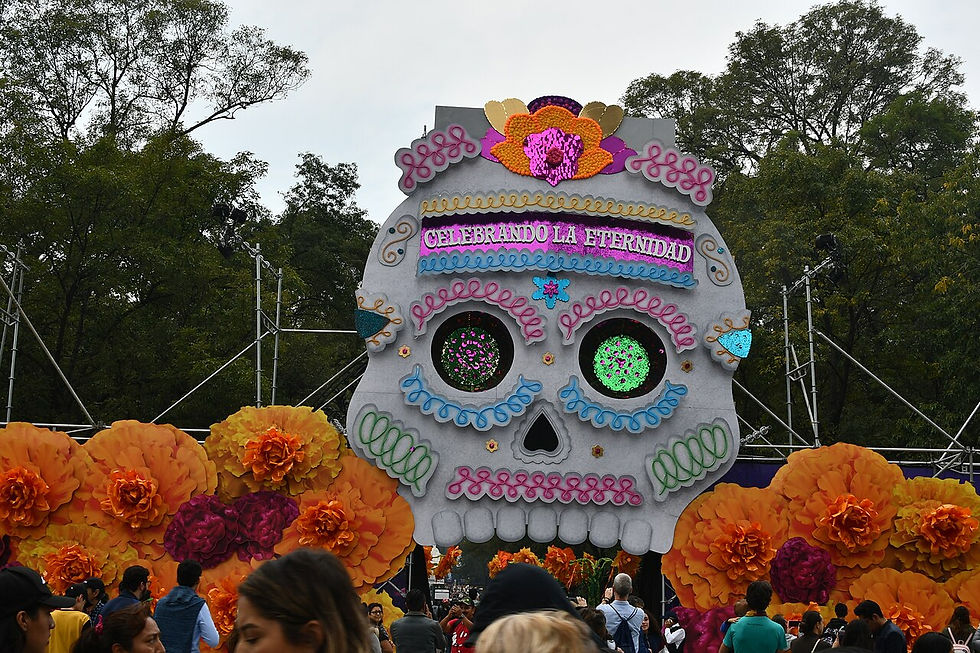
A Día de Muertos celebration photographed on November 2, 2019. Photo: Germán Troconis Trens / Wikimedia Commons, CC BY-SA 4.0.
For a closer look at those personal traditions, read why Mexico celebrates the people we miss.
Sources and further reading: Library of Congress, UNAM, Smithsonian American Art Museum, Rutgers University and UNESCO.
And if your visit stretches into a cool evening outdoors, pack a warm layer, take your time and enjoy learning the stories behind what you see.
Don’t Forget to Bring a Blanket!

Comments